
ACORDO ICSM S.R.L. · Baia Mare, Romania
From industrial swarf, chips and solid aluminium to post-consumer aluminium cans, ACORDO turns waste into valuable resources for industry. Through modern recycling technologies, digital control and full traceability, we recover aluminium and reintegrate it into the economic cycle as recycled aluminium ingots, contributing to the efficient use of resources, reduced environmental impact and the development of the circular economy.
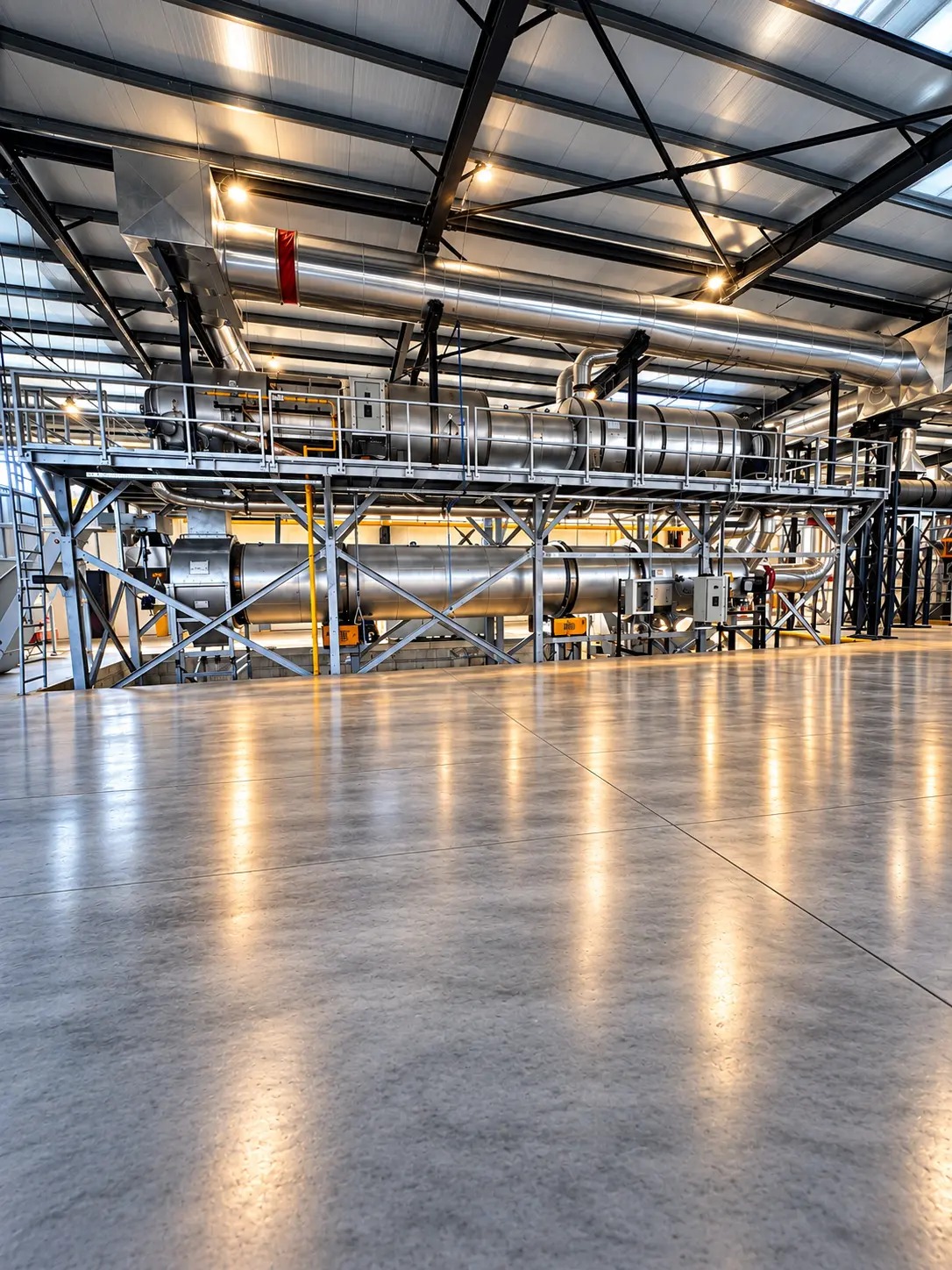
The ACORDO ICSM plant
An integrated technological flow. From aluminium swarf to metal with industrial value.
At ACORDO ICSM, aluminium recycling is a complex metallurgical process in which every operation is designed to recover the metal, remove impurities and obtain a finished product with controlled chemical properties.
The Baia Mare plant is built around an integrated technological flow that combines mechanical preparation of the waste, separation of contaminants, thermal treatment, melting, refining of the liquid metal and automated casting into ingots.
Processing begins with the preparation of the raw material. Aluminium swarf from turning, milling and other machining operations is fed into an automated feeding system, fitted with an intake hopper, a buffer tank, a vibrating table and industrial conveyors. The material passes through a system that separates bulky metal parts, after which it is shredded in an industrial shredder down to particles with controlled dimensions of approximately 2–3 mm. This preparation ensures the homogenisation of the material and facilitates the subsequent separation and treatment operations.
An essential element of the process is the separation of contaminants and the recovery of technological fluids. The shredded material is treated in an industrial centrifuge operating continuously, designed to separate the liquid components, in particular oils and emulsions resulting from machining. The flow continues through screening and magnetic separation systems, which remove dust and fine ferrous particles. The aluminium is thus prepared for thermal processing under controlled conditions.
Before melting, the swarf undergoes a drying process in an industrial rotary drum unit designed to operate at temperatures of approximately 300–500°C. The installation uses gas-fired burners, automated temperature control systems and atmosphere monitoring through oxygen probes. By removing moisture, residual emulsions and volatile components, this stage contributes to the proper preparation of the raw material and to reducing the smoke generated in the subsequent melting process.
The drying technology is complemented by afterburning and energy recovery systems. The resulting gases are managed through a technological assembly that includes a horizontal cyclone, an afterburning chamber and extraction and recirculation fans. The recovered thermal energy is used within the process, including for the thermal supply of the drying system. This integration optimises energy consumption and makes more efficient use of the energy generated in the installation.
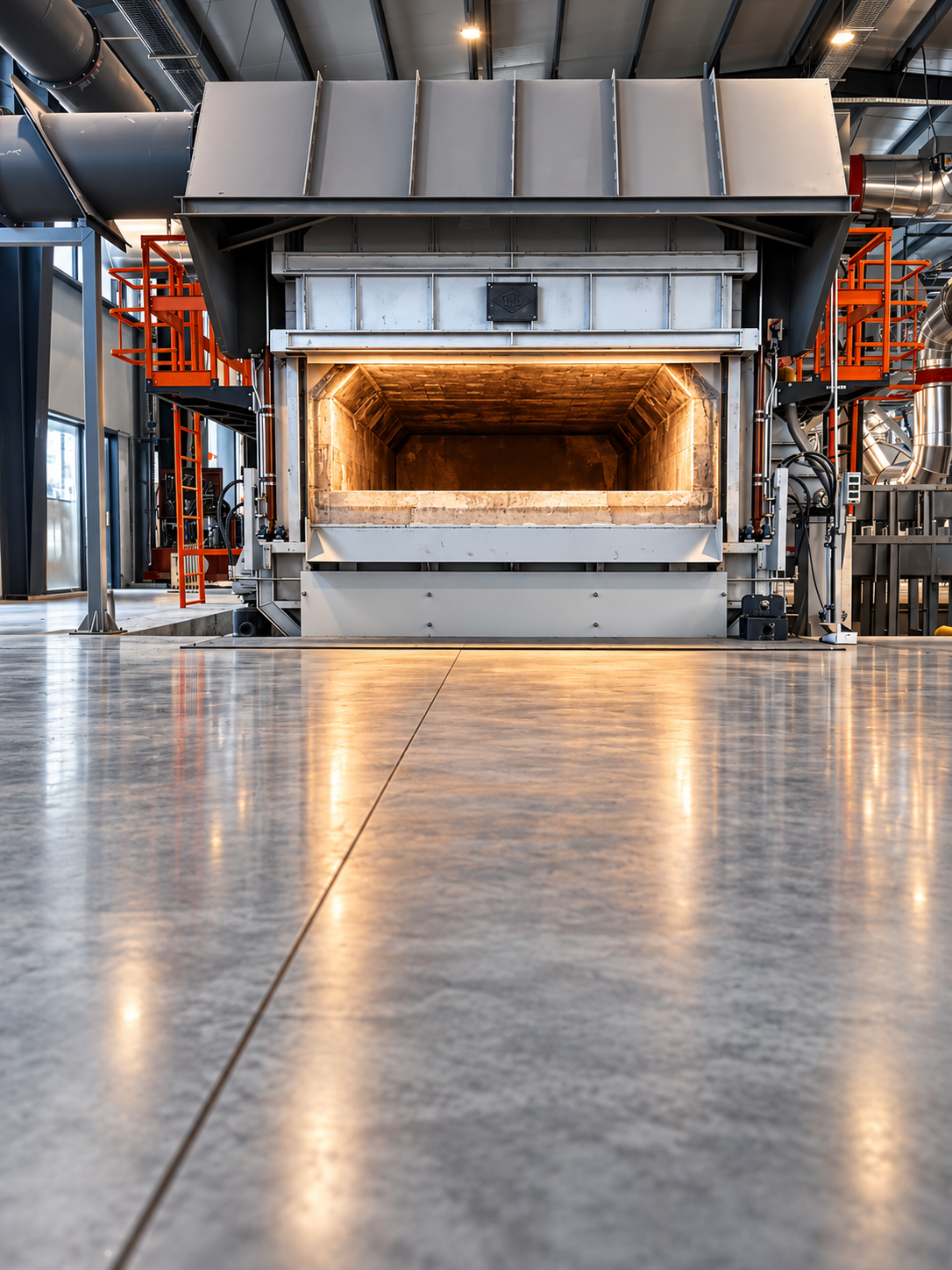
The actual transformation of the aluminium takes place in the industrial melting furnace. The plant is equipped with a static reverberatory furnace with a side well and a volume of approximately 12 tonnes, designed to operate at around 700°C with a nominal melting capacity of approximately one tonne per hour. The installation is fitted with four gas-fired burners, an automated air–fuel mixture control system, liquid metal level monitoring by laser sensor and heat recovery systems for the exhaust gases.
The furnace configuration allows the melting process and the thermal conditions to be managed, aiming to obtain a metal bath suitable for the subsequent treatment and casting operations. The ventilation, capture and gas filtration systems are integrated into the installation configuration to control the emissions resulting from the metallurgical process.
After melting, the liquid metal is transferred to a tilting holding furnace with a volume of approximately six tonnes. It maintains the temperature and homogeneity of the metal until it enters the treatment and casting line. The transfer of the liquid metal to the following operations takes place through specialised refractory channels, known as launders, using gravity flow.
A fundamental role in achieving metallurgical quality is played by the degassing and filtration system for the liquid aluminium. The continuous degassing unit uses the controlled injection of an inert gas — nitrogen and/or argon — through a special rotor that disperses the gas into the liquid metal. The process aims to remove dissolved hydrogen and reduce impurities and non-metallic inclusions. The system is located upstream of the casting line and is complemented by a filtration unit with thermal control.
After the metallurgical treatment, the aluminium is directed to the automated ingot casting line. The installation is equipped with a 120-mould ingot casting machine, a cooling system and automated ingot extraction mechanisms, with a specified nominal capacity of approximately ten tonnes per hour. Process automation is supported by a laser control system, and handling and stacking of the products are integrated into a robotised cell with a six-axis anthropomorphic robot.
The resulting product is thus transformed from aluminium waste into a standardised metallic form, ready for identification, handling, storage and delivery to industrial customers.
The entire process is supported by a SCADA monitoring and control system that allows technological data collection, equipment supervision and real-time visualisation of operating parameters. The digitalisation of the process provides the basis for integrated production management and for extended traceability of materials.
Metal quality is verified by the plant's own laboratory infrastructure, equipped with an optical emission spectrometer, a portable XRF analyser, a gas detector for checking the hydrogen content of the metal bath, and equipment for sample preparation and testing. These allow the determination of the chemical composition, the verification of metallurgical characteristics and the adjustment of treatments before casting, depending on the analysis results.
At ACORDO ICSM, technology is not seen as a sequence of independent operations but as an integrated industrial system. From swarf preparation and metal recovery to melt treatment, automated casting and laboratory verification, every component contributes to the final objective: obtaining recycled aluminium with controlled properties and industrial value.
We do not stop at recovering aluminium. We invest in the technology needed to turn it into a metallurgical resource for the next industrial cycle.
ACORDO ICSM – technology, precision and added value in aluminium recycling.