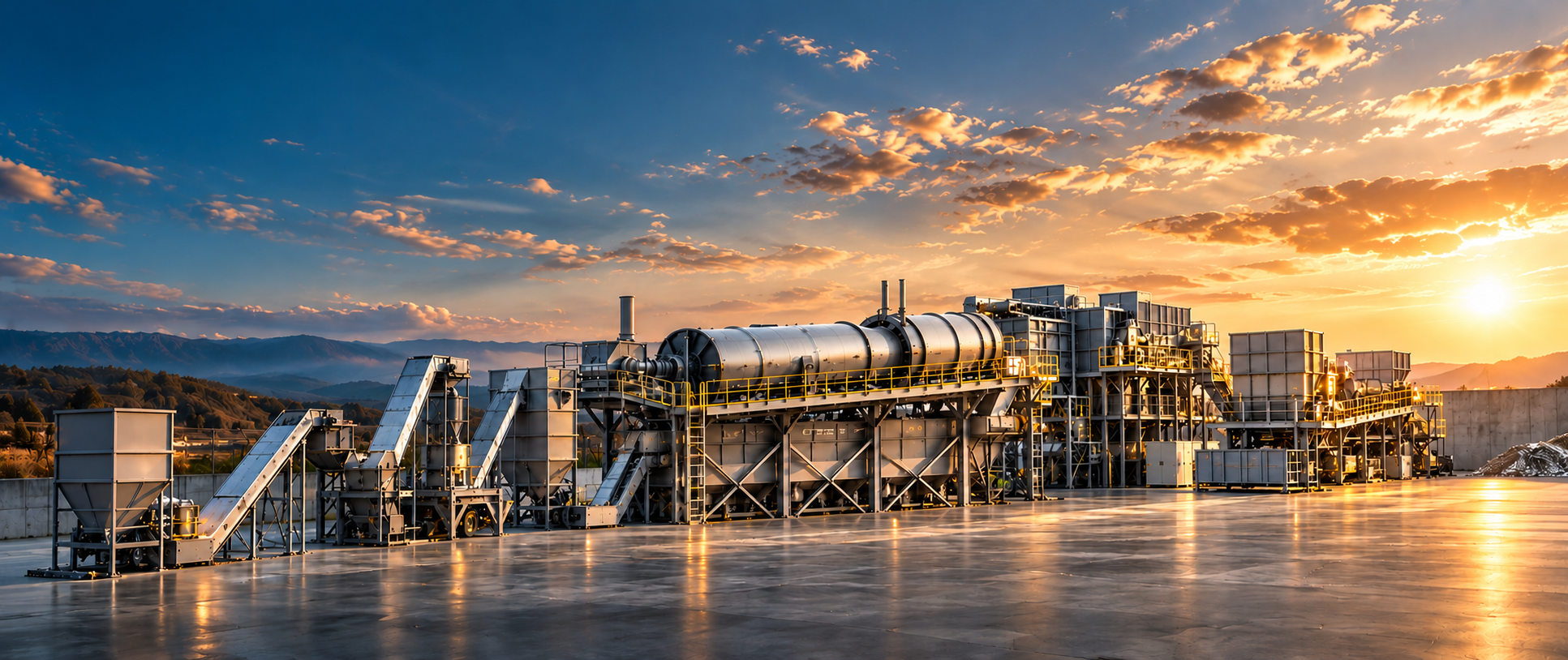
We take over and recover aluminium chips, briquetted chips, solid aluminium and drink cans from packaging waste, turning them into recycled aluminium ingots. Through industrial processing technologies and control of the chemical composition, we contribute to recovering resources and reintegrating aluminium into the economic cycle.
Logistics and collection
We organise transport, provide QR-coded containers and record every intake at the plant weighbridge.
Analysis and quality certificate
In-house laboratory with spectrometer, portable XRF analyser and laboratory furnace. Every batch ships with its certificate of analysis.
Production to specification
We cast batches to customer requirements, robot-palletised, with recorded weight and the marking cast directly into the ingot.
Process steps
Eight stages, controlled and recorded
Every stage has defined quality control points, and process data is recorded automatically by the SCADA system.
01
Intake and identification of the waste
Every transport is recorded and weighed, and the materials are identified by origin, type and characteristics. The transport documents are checked, and a visual inspection and sampling are carried out to assess the acceptance conditions.
02
Characterisation and quality control
The waste is assessed by chemical composition, moisture, impurities and alloy characteristics. Laboratory analyses help identify the materials and establish the appropriate processing conditions. Separate management of the batches supports quality control and traceability.
03
Sorting and material preparation
The plant targets several categories of aluminium waste: industrial chips, briquetted chips, solid aluminium and drink cans from packaging waste. Depending on the characteristics of each material, preparation may include sorting, removal of impurities and separation of any ferrous particles. The aim is a material suited to processing and reduced metal losses in the following stages.
04
Drying and conditioning
For chips from machining, drying is an essential stage for reducing moisture and emulsion residues. The plant has a rotary drying system with energy recovery and a post-combustion chamber for treating the gases produced by the process. Proper preparation of the material improves the melting yield and reduces losses through oxidation.
05
Controlled feeding and melting
The prepared material is fed in a controlled way into the melting furnace. For aluminium chips, the installation uses Vortex technology, which draws the particles below the surface of the metal bath, limiting contact with air and reducing oxidation. The process runs with monitoring of the operating parameters, including temperature and feeding conditions, for the efficient use of the metallic material and of energy.
06
Refining and degassing
The molten aluminium is prepared for casting by controlling temperature and chemical composition, removing dross when needed and reducing dissolved gases and non-metallic inclusions. The degassing system allows control of the operating parameters and contributes to obtaining a molten metal with characteristics suited to production requirements.
07
Ingot casting
After the molten metal parameters have been verified, the aluminium is transferred to the casting line. Temperature and operating conditions are controlled to obtain recycled aluminium ingots intended for use as secondary raw material in industry.
08
Final control, palletising and dispatch
The ingots are weighed, marked, palletised and prepared for delivery. The batch documentation may include the chemical analysis results, the production date, the weight and the information needed for traceability. This stage ensures identification of the finished product and its correlation with the relevant data from the manufacturing process.
Materials
What we accept and what we cannot take
We check every delivery at intake. Materials that do not meet the criteria are refused or redirected to authorised operators.
Accepted materials
Aluminium chips from milling and turning
Oily chips, after dewatering and degreasing
2XXX and 7XXX series alloys (including aerospace)
Cast and wrought alloys, sorted by category
Shredded aluminium waste with high metal content
Production returns and foundry rejects
Aluminium drink cans from packaging waste
Materials not accepted
Hazardous or chemically contaminated waste
Radioactive materials or pressurised containers
Mixtures with high iron, plastic or soil content
Packaging with paint residues, chlorinated oils or solvents
Do you have aluminium waste to recover?
Send us the composition and the estimated quantity and we will come back with an offer.